
Emotional Regulation
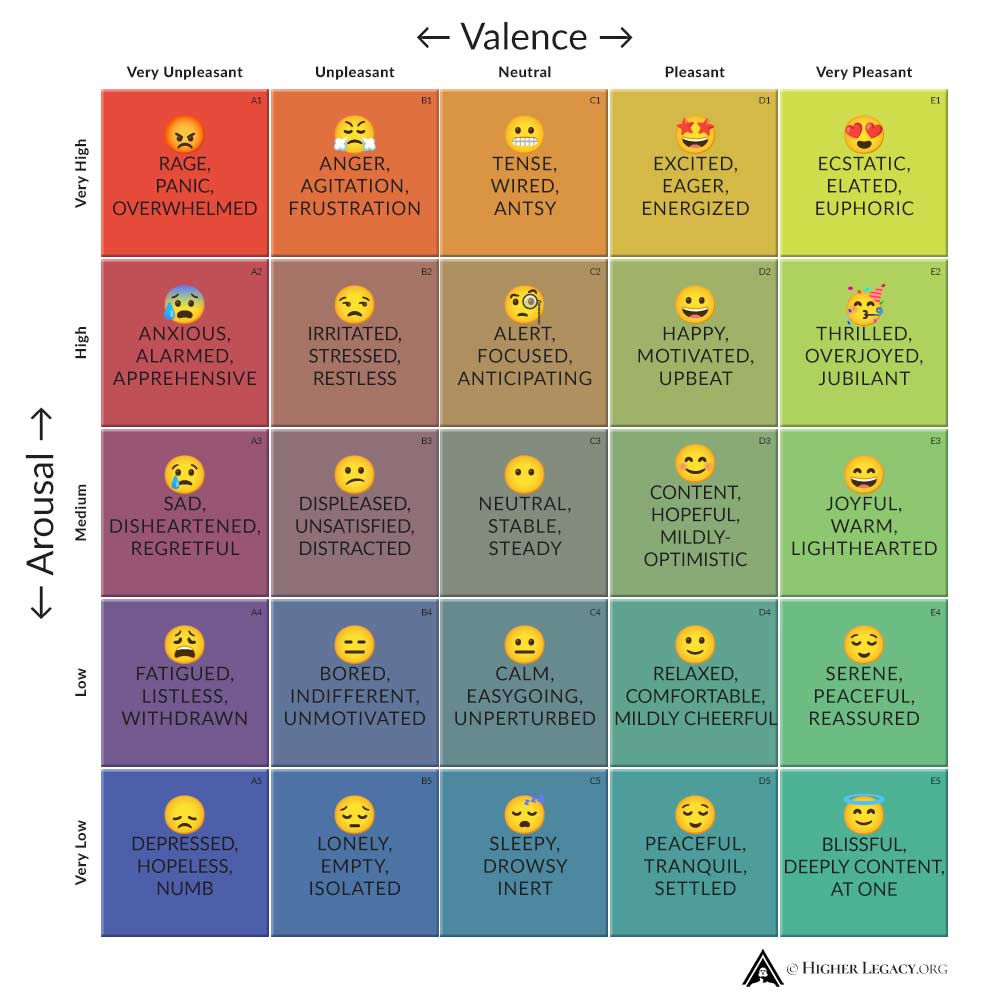
Self-assess and track emotional states using a 5×5 emotion affect grid, and use intervention strategies to improve mood.
Emotional Cause & Effect
A sudden pressure in the chest. A weight in the stomach. A smile that rises before you notice. Emotions move first, and only later do we ask why.
One harsh word, a minor setback, the quiet of being unseen; small seeds dropped into the soil of the body. They sprout as shallow breath, a headache, and restless nights. Thoughts coil around them, moods decay, and soon even simple tasks feel barren.
Yet joy and peace plant their seeds too. A kind gesture, a brief laugh, the warmth of being part of something bigger than yourself; these take root as lighter steps, deeper rest, easier breath. Connection deepens, trust grows, and life stretches open.
Emotions don’t just come and go, they are the nutrients that shape which seeds of thought take hold, bearing fragile weeds of limitation that choke, or branches of resilience bearing the fruit of prosperity.
So the question is: “When the garden of your tomorrow blooms, what will be growing there?”
And when you pause to notice, you may already sense new shoots pressing quietly toward the light.
Core Concept
Originally developed by Russel, Weiss, & Mendelsohn in 1989, the emotion affect grid integrates core affect theory into a 2D model.
Core affect is a brain-body state characterized by two dimensions: valence (pleasant ↔ unpleasant) and arousal (activated ↔ deactivated).
Emotional states are plotted as coordinates within this matrix (A1 to E5), enabling quick self-assessment.
This inspired smaller model has been adapted from the original to make the grid more practical while reducing redundancy.
Arousal: This axis measures the intensity or energy level of an emotion. It’s linked to physiological activation (autonomic nervous system activity, energy mobilization).
- Overstimulation (excessive arousal) without positive valence could lead to stress or anxiety.
Valence: This axis measures the degree of pleasantness or displeasure.
- Focusing only on positive valence without sufficient arousal might result in calm but unmotivated states (e.g., contentment rather than excitement).
How to Apply
- Review the 5×5 grid.
- Interpret the coordinates to assess emotional states (e.g. How am I feeling right now?).
- Review the symptoms below for assistance.
- Select the cell which most accurately represents how you currently feel.
- Follow the intervention steps below to increase valence, arousal, or both.
- e.g. Do I need to increase my valence (cognitive) or my arousal (physiological)?
- Optionally, track changes over time or across interventions
- (e.g. Are my average mood states improving?).
Optional:
Download HD Image
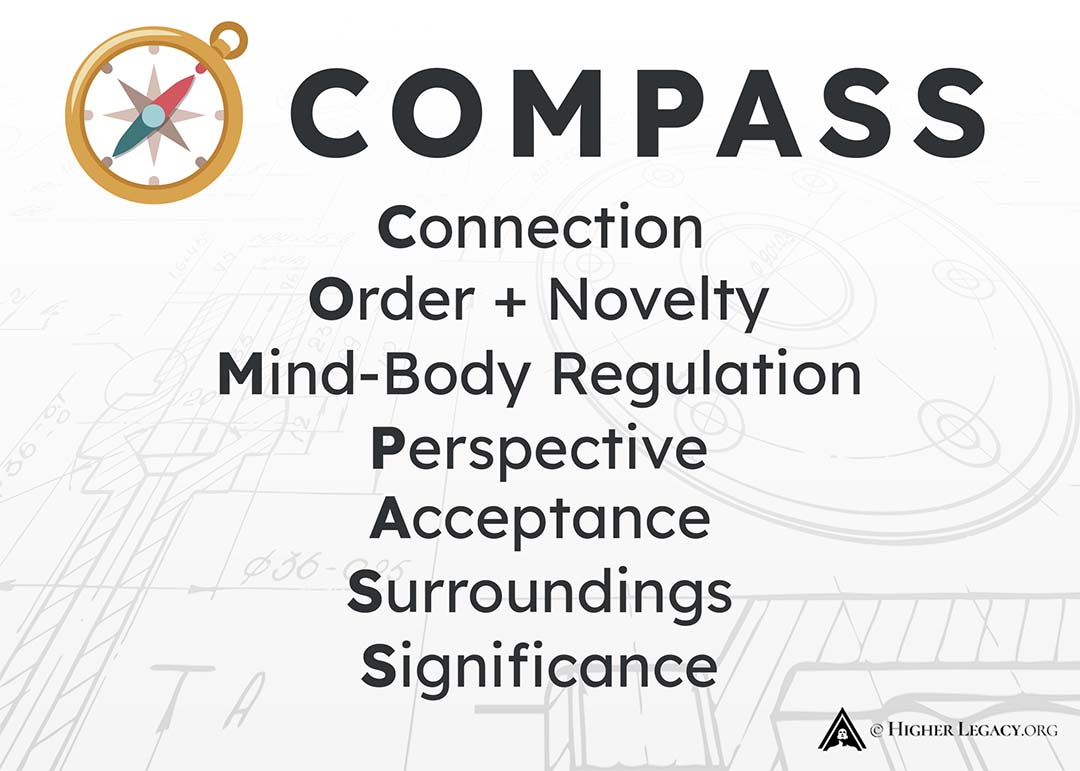
Emotional Regulation Meta-Strategy
Tactics that apply across environmental/social, physiological, and psychological domains and broadly regulate emotions toward higher valence
C – Connection
-
Build and maintain supportive relationships
-
Express gratitude and appreciation regularly
-
Engage in community, rituals, and shared experiences
O – Order + Novelty
-
Maintain stable routines (sleep, nutrition, exercise)
-
Introduce variety and play (new hobbies, exploration, creative activities)
-
Balance structure with flexibility
M – Mind–Body Regulation
-
Practice breathwork, meditation, and mindfulness
-
Use yoga, tai chi, or progressive relaxation
-
Synchronize physical calm with mental focus
P – Perspective (Reframing)
-
Challenge negative thought patterns
-
Use humor and optimism to shift mood
-
Replace self-criticism with constructive self-talk
A – Acceptance & Self-Compassion
-
Cultivate self-kindness and forgiveness
-
Use self-soothing rituals (music, art, nature walks)
-
Normalize imperfection and embrace growth
S – Surroundings (Environment Design)
-
Seek daylight, greenery, and calming spaces
-
Reduce sensory overload (clutter, noise)
-
Create restorative personal environments
S – Significance (Meaning & Value Alignment)
-
Align daily actions with personal values
-
Contribute to causes larger than yourself
-
Reflect on purpose through journaling or service

Resource Pack: 30 Days To A Better Mood
Targeted Strategies
High Arousal + Unpleasant Valence
(Rage, panic, anxiety, anger, stress, apprehension, overwhelm)
Symptoms
-
Social: Aggression, Irritability, conflict, verbal outbursts, withdrawal
-
Physiological: Rapid heartbeat, sweating, tense muscles, shallow breathing, hyperventilation, insomnia
-
Psychological: Racing thoughts, hypervigilance, panic, catastrophizing, loss of control, difficulty concentrating
Causes
-
Social: Conflict, criticism/social rejection, unsafe/chaotic environment, work stress
-
Physiological: High cortisol/adrenaline, caffeine/stimulant overload, sleep deprivation
-
Psychological: Perfectionism, worry, trauma triggers
Interventions
-
Social: Conflict resolution, seek support, safe space/time out, reduce environmental chaos
-
Physiological: Deep breathing, grounding techniques, progressive muscle relaxation, reduce stimulants, improve sleep
-
Psychological: Cognitive behavioral therapy (CBT) to reframe thoughts, mindfulness, stress management training
Low Arousal + Unpleasant Valence
(Fatigue, sadness, boredom, loneliness, depression, hopelessness)
Symptoms
- Social: Withdrawal, isolation, low responsiveness
- Physiological: Lethargy/fatigue, poor posture, oversleeping or insomnia, aches, low appetite
- Psychological: Hopelessness, lack of motivation, rumination, numbness, impaired concentration
Causes
- Social: Social rejection, isolation, monotonous routines, bereavement, grief/loss, chronic stress exposure without resolution
- Physiological: Neurochemical imbalance (low serotonin, dopamine), Illness, nutrient deficiencies, substance withdrawal, poor sleep
- Psychological: Low self-esteem, learned helplessness, unresolved trauma, low self-efficacy
Interventions
-
Social: Increase social connection, structured activities, support groups
-
Physiological: Improve sleep hygiene, balanced nutrition, medical check-ups, gentle activity, exercise programs
-
Psychological: Therapy (CBT, ACT), journaling, gratitude, small achievable goals, addressing grief
High Arousal + Pleasant Valence
(Excitement, eagerness, elation, joy, motivation)
Symptoms
-
Social: High sociability, enthusiasm, laughter, engagement
-
Physiological: High energy, fast speech, animated body language, stamina
-
Psychological: Optimism, confidence, creative thinking, flow state
Causes
-
Social: Positive recognition, celebrations, supportive groups, anticipation of reward
-
Physiological: Dopamine/endorphin release, healthy stimulation, good sleep, nutrition
-
Psychological: Clear goals, positive outlook, gratitude, alignment with purpose
Expression
-
Social: Channel energy into teamwork, leadership, or collaboration
-
Physiological: Sustain with balanced rest, avoid burnout, use exercise
-
Psychological: Leverage optimism to set/achieve goals, practice gratitude journaling
Low Arousal + Pleasant Valence
(Calmness, relaxation, peacefulness, serenity, bliss)
Symptoms
-
Social: Warmth, patience, receptivity, comfort in companionship/solitude
-
Physiological: Slow breathing, relaxed muscles, stable HR/BP, restful state
-
Psychological: Inner peace, acceptance, mindfulness, reduced rumination
Causes
-
Social: Supportive, safe environment; trust; nature exposure; structured routine
-
Physiological: Parasympathetic activation, adequate sleep, balanced diet, gentle activity
-
Psychological: Mindfulness, self-compassion, value alignment, spiritual fulfillment
Expression
-
Social: Strengthen positive bonds, maintain balance between solitude & community
-
Physiological: Continue relaxation practices (yoga, tai chi, breathwork), regular rest
-
Psychological: Deepen mindfulness, gratitude, meditation, journaling to maintain balance
💁♂️ Disclaimer:
For some people, especially those with mood disorders, increasing valence may be harder than increasing arousal, or vice versa. However, the strategies can still be effective with persistent use.
If you are someone with chronic mood disorder and there is no improvement or things are getting worse, consider reaching out to a professional therapist.
“May the God of hope fill you with all joy and peace as you trust in him…”
– Romans 15:13