
Locus of Control
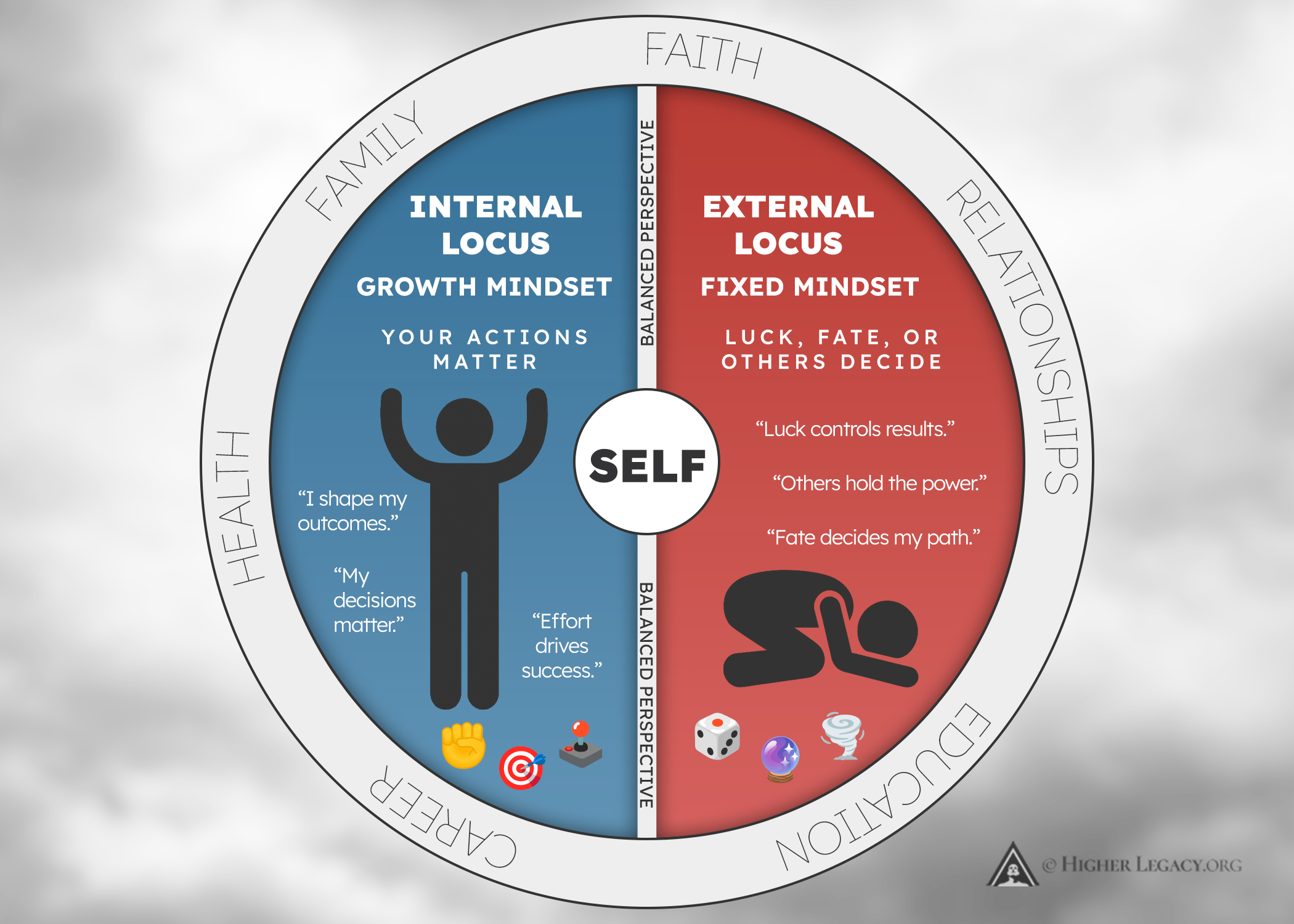
The extent to which one believes they can control events affecting their lives; internal (your actions matter) or external (luck, fate, or others decide).
Core Concept
Locus of control is a simple idea from psychologist Julian Rotter: it’s about whether you see yourself as the driver of your life (internal) or if you think things mostly happen because of luck, fate, or other people (external). Ask yourself: do your choices shape what happens, or is it out of your hands?
Why does this matter? Because of stress and adaptability.
People who lean internal often feel more motivated and bounce back easier from setbacks because they focus on what they can do. But it’s smart to recognize external stuff too, so you don’t beat yourself up over things you can’t change.
How It Connects to Your Mindset:
Internal locus often pairs with a “growth mindset”: the belief that you can improve skills through effort.
It encourages “reframing,” or flipping a problem into a learning opportunity (e.g., “This failure teaches me something” instead of “I’m just bad at this”).
External locus might link to a “fixed mindset,” where you see abilities as unchangeable, leading to giving up quicker.
How It Ties to Setting Boundaries:
Strong internal locus: You set clear limits because you believe your actions count.
Example: “I’m not checking work emails after 6 PM to protect my rest time.”
Strong external locus: Boundaries feel harder; you might please others or feel powerless.
Example: “I can’t say no to my boss—they control everything.”
The Four Quadrants: Where Do You Fit?
| Internal Locus | Low External | High External |
| High Internal |
Quadrant 4: “I Drive My Life” |
Quadrant 2: “Balanced View” |
| Low Internal |
Quadrant 3: “Detached Outlook” |
Quadrant 1: “Things Happen to Me” |
Which quadrant describes you most in work, relationships, or health? What one shift could move you toward balance?
Key Notes for Application:
- Your locus of control changes by context (e.g., you might feel in control at work but not in friendships) and isn’t set in stone—upbringing, culture, or experiences influence it.
- Aim for Quadrant 2: Focus on what you can act on while accepting the rest. This supports better decisions and well-being.
5-Step Plan for Internal Control
Step 1: Take a Quick Test
-
- Use a free online version of Rotter’s scale.
- Score it: High internal = you feel in charge; high external = outside forces rule; balanced = mix.
Step 2: Reflect on Results
Journal these (10 minutes daily):
-
- Areas where you own outcomes.
- Spots where you blame externals.
- One place to boost control.
- Track 3-5 recent events: What did you attribute to your actions vs. luck/others?
What patterns emerge?
Step 3: Spot Growth Areas
For external thoughts (e.g., “Bad luck caused this”), list internal evidence (e.g., “What could I prepare better?”).
Reframe: “Luck played a part, but I can skill up.”
Use a table:
| Original Thought | Evidence For/Against | New Thought |
Set a small goal, like “Walk 20 minutes daily this week.”
Track: What linked effort to results?
Step 4: Build Habits
Daily challenges:
-
- Own mistakes without excuses.
- Pick one controllable area per day.
- Ask a friend for feedback on your role in a situation.
- Debrief events: “What can I tweak next time?”
- Journal controllable elements bi-weekly.
What small action today could build your ownership?
Step 5: Check Progress Every 4-6 Weeks
-
- Retest and log shifts (e.g., more internal attributions).
- If stuck, read on growth mindset (like Carol Dweck’s book).
- Reward yourself for consistency.
“No matter what your ability is, effort is what ignites that ability and turns it into accomplishment.”
– Carol Dweck (Growth Mindset)