Flow Cycle
A self-regulating system of human performance and consciousness composed of four recurrent phases:
1. Struggle, 2. Release, 3. Flow, 4. Recovery
Core Concept
The Flow-Cycle, from Mihaly Csikszentmihalyi’s flow theory, is a self-regulating system of human performance and consciousness composed of four phases:

1. Struggle
deliberate engagement with challenge; activation of effort, focus, and tension.

2. Release
strategic disengagement that lowers cognitive load and triggers insight.

3. Flow
total absorption where action and awareness merge; peak performance.

4. Recovery
physiological and psychological restoration that integrates gains.
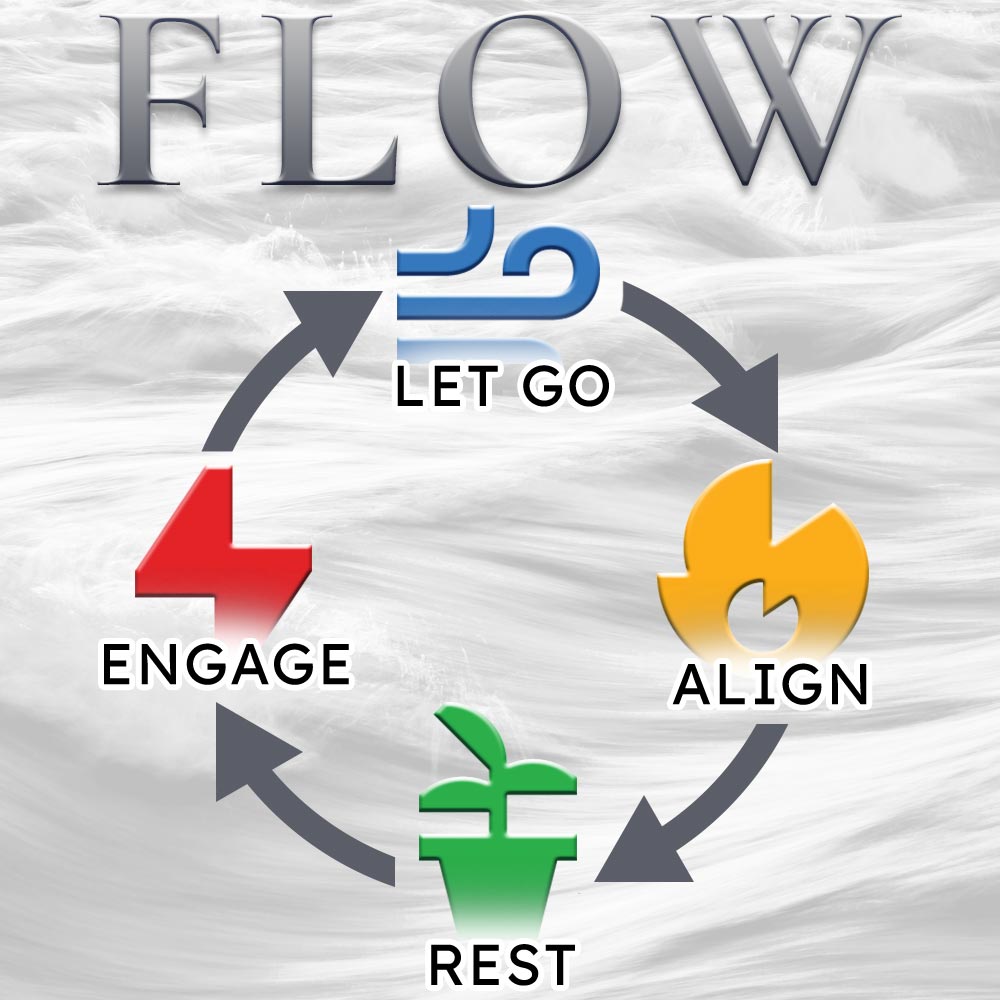
The purpose of the Flow-Cycle is to synchronize biological energy, cognitive focus, and emotional equilibrium for sustainable high performance. It transforms linear work into a rhythmic, self-correcting loop that maximizes output and well-being simultaneously.
The Flow-Cycle sits at the intersection of:
-
Neuroscience: Dopamine, norepinephrine, endorphins, and serotonin regulate transitions between stages.
-
Psychology: Challenge-skill balance, attention gating, and intrinsic motivation drive entry.
-
Systems theory: Non-linear dynamics; homeostasis through oscillation.
-
Philosophy of being: Harmony between effort and surrender as existential balance.
Contextually, it resolves the tension between productivity culture (constant struggle) and mindfulness culture (constant release) by unifying them into one living system. Every performance system requires oscillation between tension and release.
Note: You cannot stay in flow continuously; it rises and falls like the sea. Trying to remain in flow permanently is like trying to freeze a wave, you destroy its beauty by denying its motion.
The Flow-Cycle
1. Struggle Phase
The Struggle phase is characterized by mental effort, frustration, and pushing cognitive or physical limits. You’re attempting to engage with a challenging task that requires focus and persistence, often resulting in discomfort or difficulty.
Cortisol and norepinephrine are dominant here. They increase stress and alertness, helping to heighten awareness but also causing discomfort.
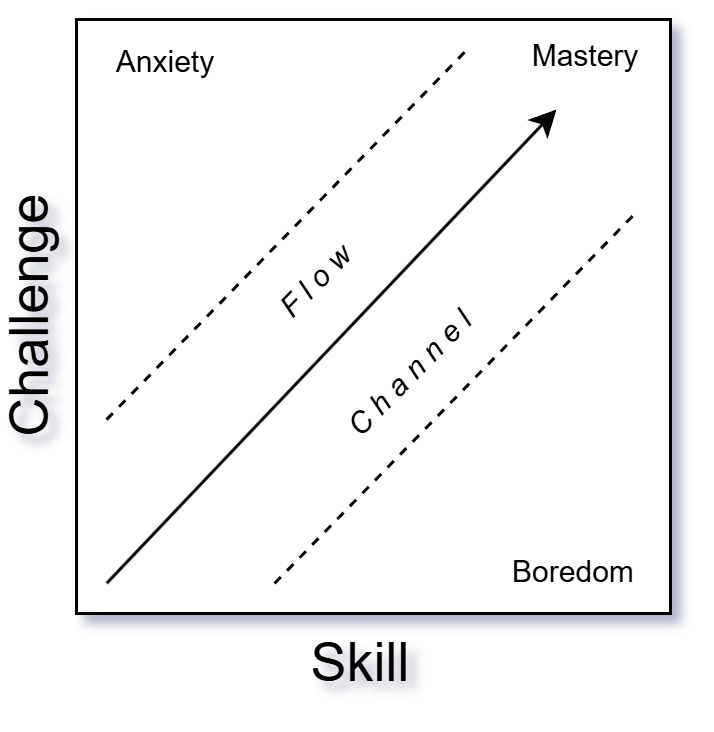
The Challenge-Skills Balance Model
A representation of entering and sustaining flow until mastery by balancing the challenge of the activity with your skills and capabilities.
The model explained:
- The Y-axis (vertical) represents the level of challenge. The X-axis (horizontal) represents skill capability.
- When challenge is high and skill is low, stress and anxiety occur (high friction), resulting in overwhelm and burn out.
- When challenge is low and skill is high, boredom occurs (low friction), resulting in dissatisfaction and withdrawal.
- When challenge and skill are balanced, heightened focus occurs, resulting in motivation, creative immersion, temporal distortion, and high-alignment with mastery (or a future ideal of yourself).
Through observation of task challenge and subjective and objective assessment of skill proficiency, you can place yourself on this model in any of four positions (low/low, low/high, high/low, high/high) and adapt your strategic plan accordingly.
Being uncomfortable isn’t an issue, but it’s the necessary friction that shapes your capacity to grow.
Think of it like the blacksmith’s forge where raw iron (skill) meets fire (challenge). If you avoid the heat, your blade remains dull; if you overheat it, it cracks. The mastery lies in standing close enough to the flame to transform, but not to burn.
Calendar Surrender
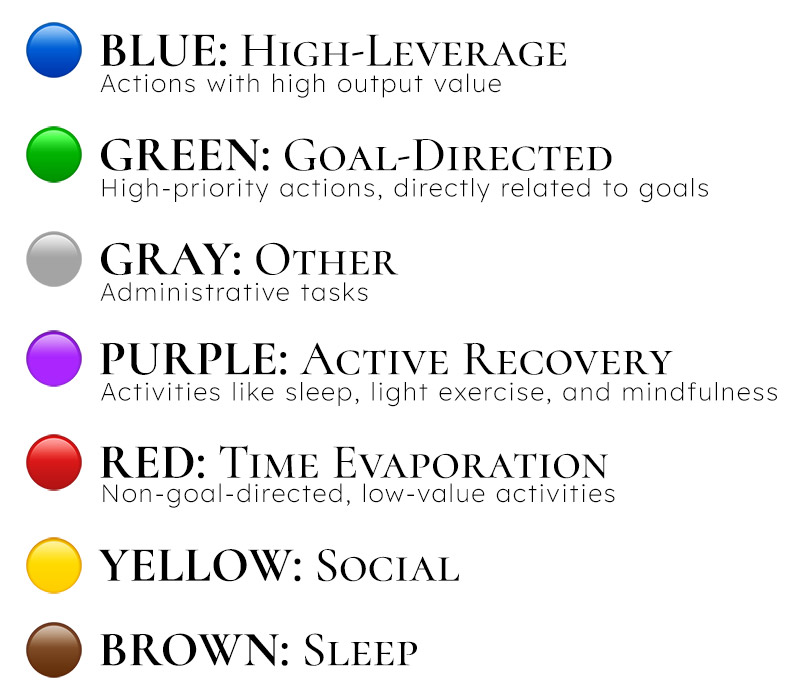
A strategy designed to optimize one’s daily schedule for maximizing productivity and flow. Essentially, it transforms your calendar into a “mission control” that guides peak performance.
The goal is to reduce cognitive load and decision-making throughout the day, enabling a person to focus on executing tasks mindlessly without needing to analyze or prioritize in real-time.
It involves pre-planning and scheduling all important tasks, routines, and events in advance.
Methods:
- Time-Blocking: Allocating specific time blocks for essential work and routines.
- Recurring Events: Setting up recurring events for regular activities such as sleep, family time, and exercise.
- Decision Autopilot: Writing down micro-decisions within calendar events, so routines run automatically without real-time thought.
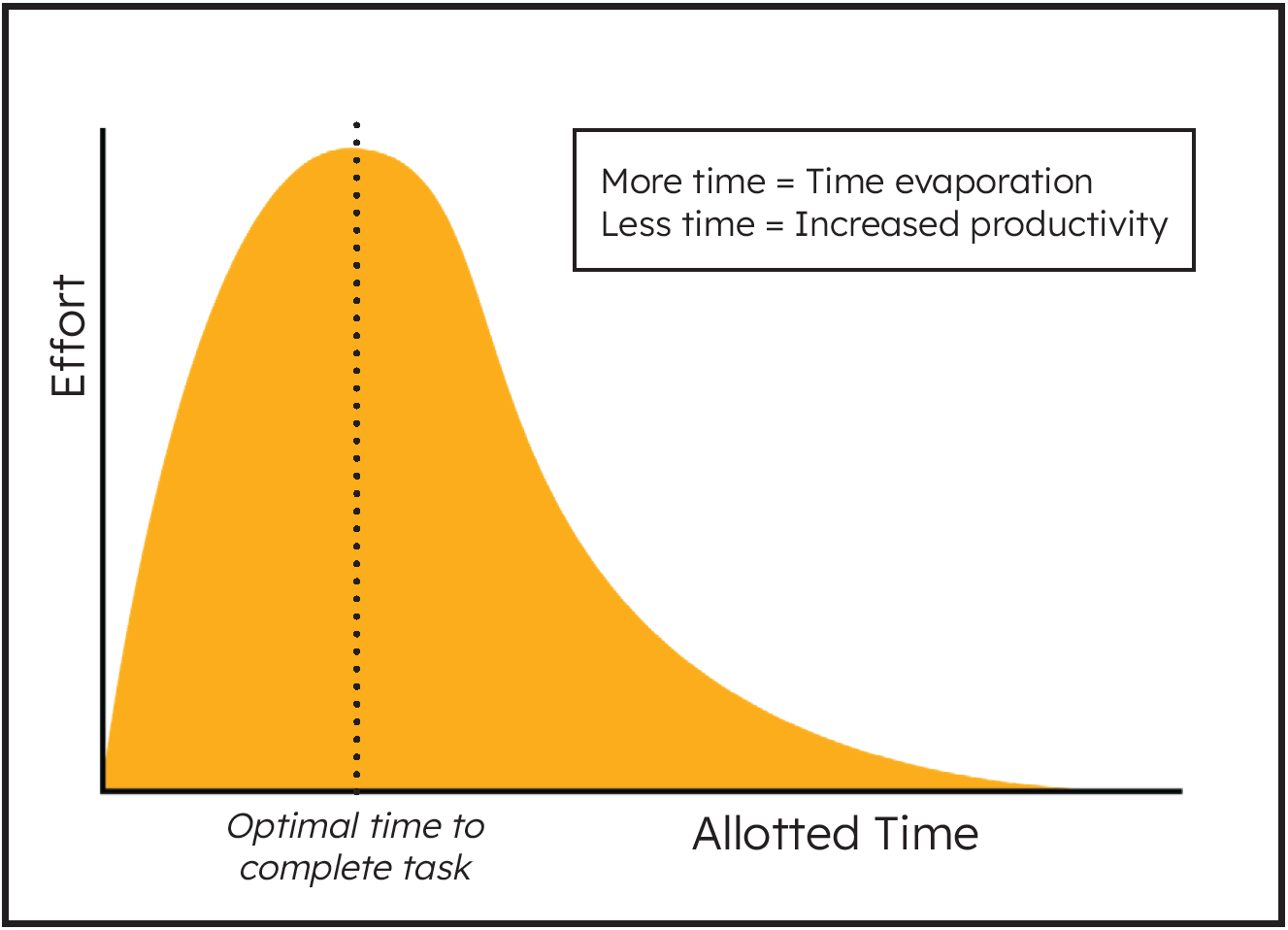
Work Compression (Parkinson’s Law)
A method designed to increase productivity by limiting work hours and setting strict boundaries, compelling individuals to work smarter, not longer.
Less time → higher perceived importance, better focus, deeper recovery.
Research shows that reducing work hours leads to increased focus, better time management, and long-term consistency.
The key principle: “When you want to multiply output, subtract hours”.
Methods:
-
Guardrails: Over-compression early can cause thrash; reduce in stages (25%, then 40–50% after 2–3 weeks).
-
Variations: Split-day containers (AM creation, PM collaboration); “no evenings” constraint.
-
Metrics: Output per hour; task completion rate; after-hours leakage; recovery quality (sleep, HRV if tracked).
Key Actions:
- Resist the temptation to quit or engage in distractions, as interrupting this phase resets the entire flow cycle.
2. It’s crucial to push through this initial discomfort to trigger the flow cycle’s next stages.
2. Release Phase
Letting go of the intense focus and relaxing. It acts as a bridge between the stressful struggle phase and the effortless flow state. Stepping back from the task gives your subconscious time to work through the challenge in the background.
Cognitive liberation (release) is the bridge between struggle and insight. Decision reduction (via structure or automation) increases the probability of entering flow.
During release, the brain shifts from high beta waves (active concentration) to more relaxed alpha waves, which are associated with daydreaming and relaxation. The brain releases chemicals like dopamine, which enhances pleasure and motivation as you start feeling relief from the struggle.
3. Flow Phase
Experience full immersion in the task. It’s marked by effortless concentration, enjoyment, and high performance. In this state, you are fully absorbed in the task, losing track of time, and performing at your peak with a sense of ease.
A cocktail of neurochemicals—dopamine, norepinephrine, anandamide, endorphins, and serotonin—are released during flow. These enhance pleasure, focus, creativity, and physical performance. The brain’s electrical activity often enters the theta wave frequency, which is associated with deep creativity and insight.
4. Recovery Phase
Recuperate from the intense focus and energy expenditure of the flow state. This stage is crucial to restore balance and prepare for the next cycle. Neurochemicals are depleted during flow, so recovery allows the brain and body to replenish these chemicals, clear stress, and consolidate memories and skills.
The body clears stress hormones like cortisol and replenishes neurochemicals like dopamine and serotonin used up during flow.
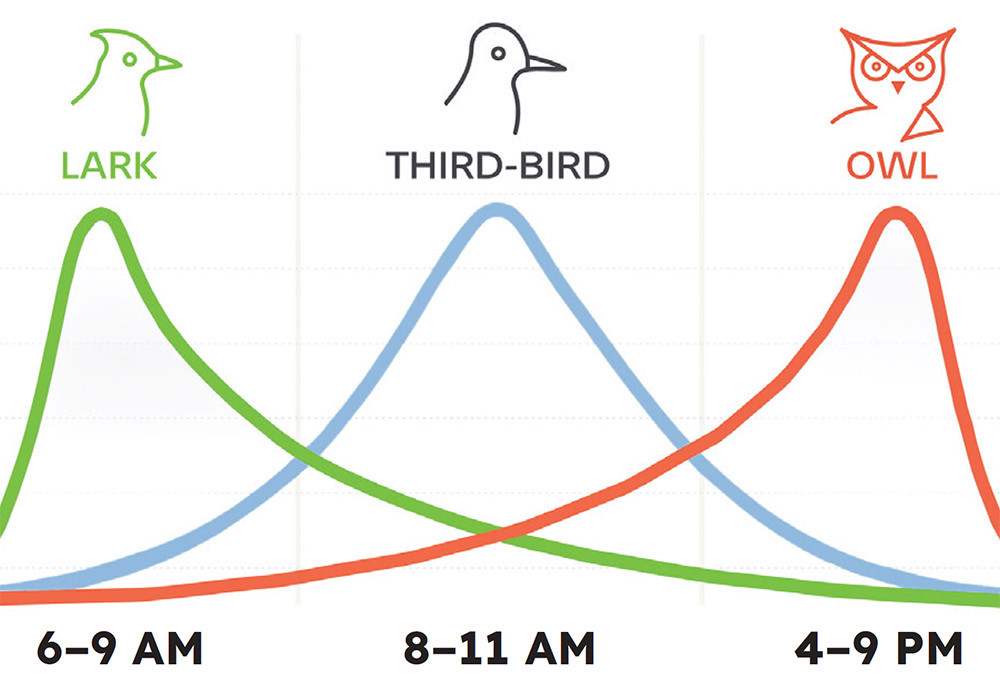
Chronotype Alignment (Peak Flow State)
Maximize deep work efficiency by scheduling tasks according to individual chronotypes (Lark, Third Bird, Owl) and peak cognitive states.
Non-Sleep Deep Rest (NSDR)
A science-backed relaxation technique designed to promote deep recovery, mental clarity, and physical restoration without requiring sleep.
NSDR includes methods like yoga nidra, guided meditation, and deep breathing to help the brain and body recover efficiently.
By practicing NSDR, you can reduce stress and anxiety quickly, enhance focus and cognitive function, improve learning and memory retention, boost energy without caffeine or naps, and recover from sleep deprivation.
Re-engagement (Optional Pre-Struggle Stage)
Before entering the struggle phase again, there’s often a decision point called engagement where you choose to re-engage in the next challenge or task.
This decision to “engage” in work, rather than procrastinate or avoid, is essential to kickstart the next flow cycle .
Practical Application
“Life is without meaning. You bring the meaning to it. The meaning of life is whatever you ascribe it to be. Being alive is the meaning.”
– Joseph Campbell